Pianists should practice like golfers! – Professor Kim Dae-Jin’s Master Class I –
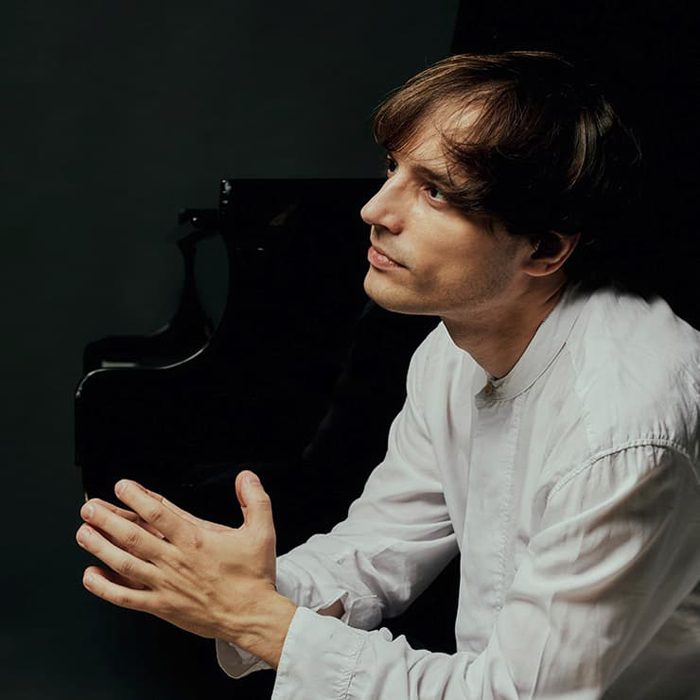
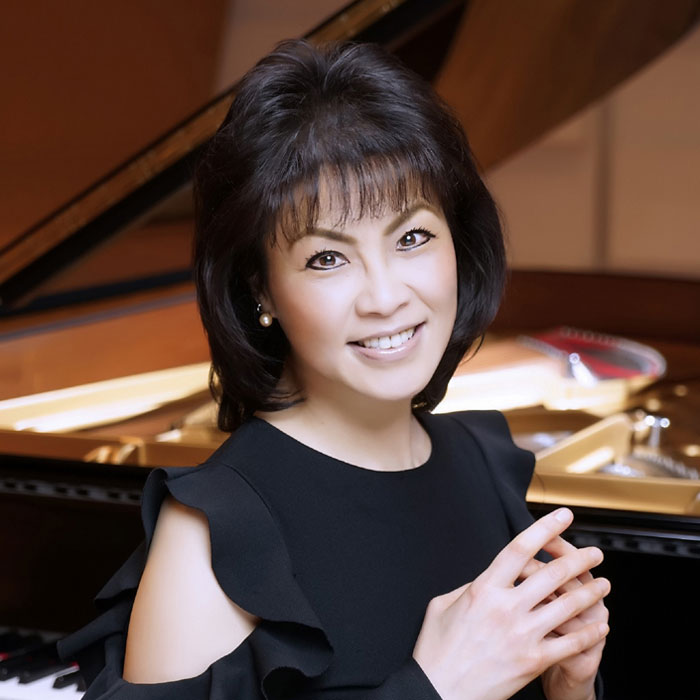
On November 19, “Pianists should practice like golfers – Professor Kim Dae-Jin’s Master Class I” was held with Mr. Alessandro Taverna (Beethoven’s Eroica Variations) and Mr. Chang Sung (Liszt’s Piano Sonata in b minor) as the students.
In his opening remark, Professor Kim said, “There are several ways to deliver a master class. One is to give knowledge about a particular work. This time, however, I would like to listen to the students’ performance, and then give some suggestion to make it better.” His master class was really inspirational for anybody who is learning to play the piano, and we were all impressed by his sincere attitude.
Mr. Alessandro Taverna: Beethoven’s Eroica Variations
Recognizing that contestants in Hamamatsu International Piano Competition are already professional performers, Professor Kim said that he wanted to provide advice for professionals. However, he also said, “It is a shame that I can’t give you a second lesson. I don’t like public master classes very much because I cannot see how the students will digest what I have pointed out” – a comment that reflected his warm and passionate attitude as a teacher.
Having listened to Mr. Taverna’s performance first, Professor Kim said, “His performance today was better than the one he gave on the 3rd Stage. As a professional pianist, he played the piece very carefully in every detail. Mr. Taverna has the ability to draw attention from the audience. So rather than giving advice on specific details, I would like to talk about one fundamental point.” What he emphasized was to “keep the consistent tempo throughout the piece”. He referred to what Mr. Seiji Ozawa mentioned in a TV program as an answer to the question: “What do young musicians need to do?”
Mr. Ozawa’s answer was:
“To be a white canvas. You can’t paint anything without a white canvas. If you have a white canvas, you can add a lot of beautiful things to it.”
What Professor Kim tried to convey was the importance of the basics.
He measured the tempo according to Mr. Taverna’s piano, and it was actually too fast from the beginning. Mr. Taverna’s performance was great, but when Professor Kim played next to him, the difference was obvious, which demonstrated his quality as an outstanding teacher.
“By keeping the same tempo, you can actually get more freedom – the freedom to add many things.”
“And do not forget to breathe, especially before you start playing. Breathing gives you a stable tempo and enables you to add various tones,” said Professor Kim. He added, “It is only the pianist who can start playing without breathing”. Point taken.
He advised Mr. Taverna that “The more relaxed you are, the more freely you can express the rhythm. Relax yourself as much as possible when you play.” Then he said, “In order to be relaxed, it is also necessary to practice playing slowly. You have to check if your performance conveys what you want to express, i.e. your own music. I myself practice playing slowly, and recommend my students to do so. It is important to listen to your own performance” – a very convincing piece of advice, indeed.
How can you do that effectively then?
“An effective way is to record your performance on a tape.”
“It is important to play freely while maintaining the same tempo. It is not about keeping the pace mechanically like a metronome, but it’s about finding freedom in a consistent rhythm. I didn’t have the courage to listen to my own performance when I was young, but now I understand the importance of doing so.”
Lastly, he used a helpful comparison to conclude the lesson for Mr. Taverna: “Just as golfers videotape and check their swings, you need to listen to your own performance.”
Stay tuned for the report of the lesson for Mr. Chang Sung!!
We will also post the interview with Professor Kim later.
Tamami Tsunoda